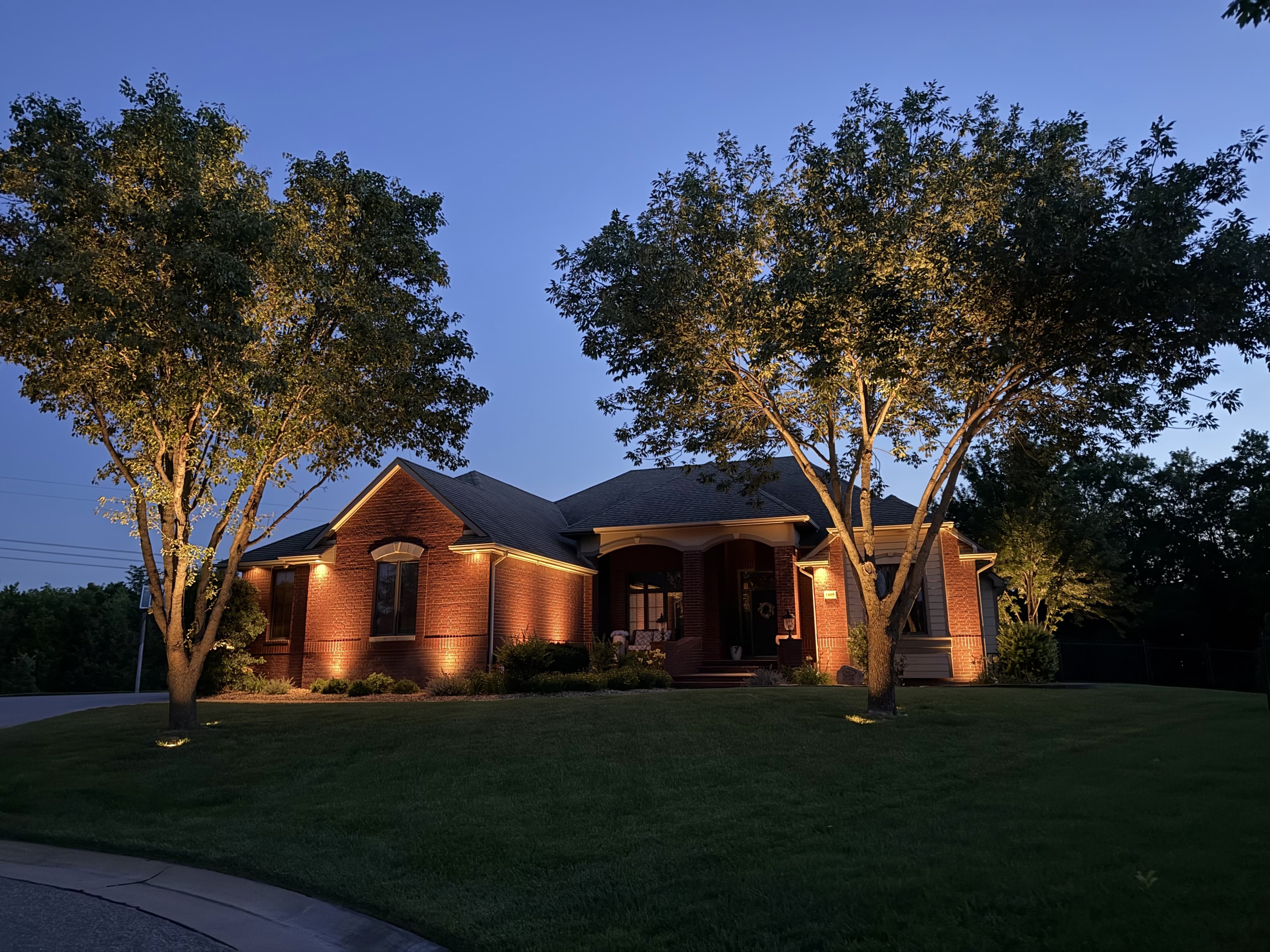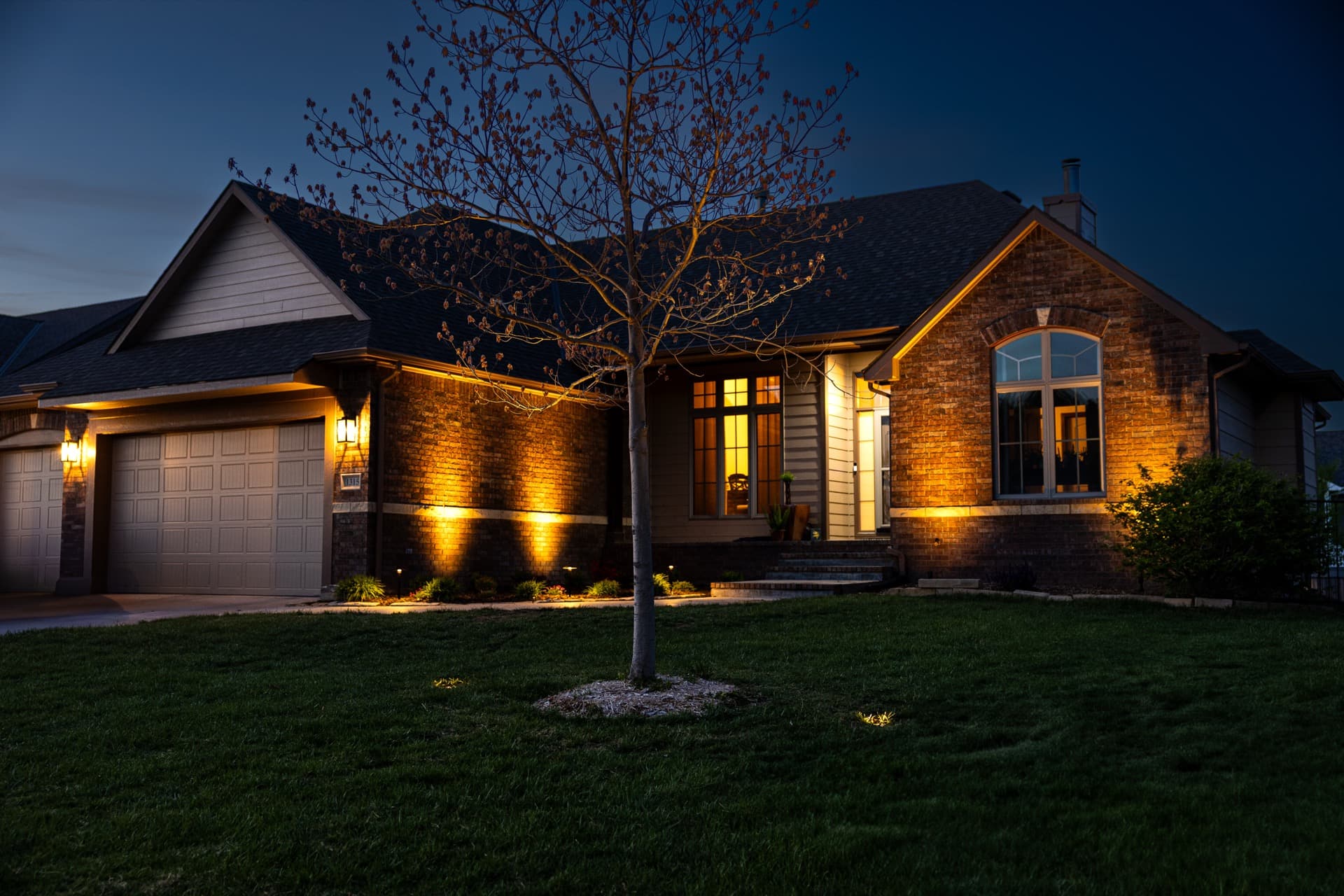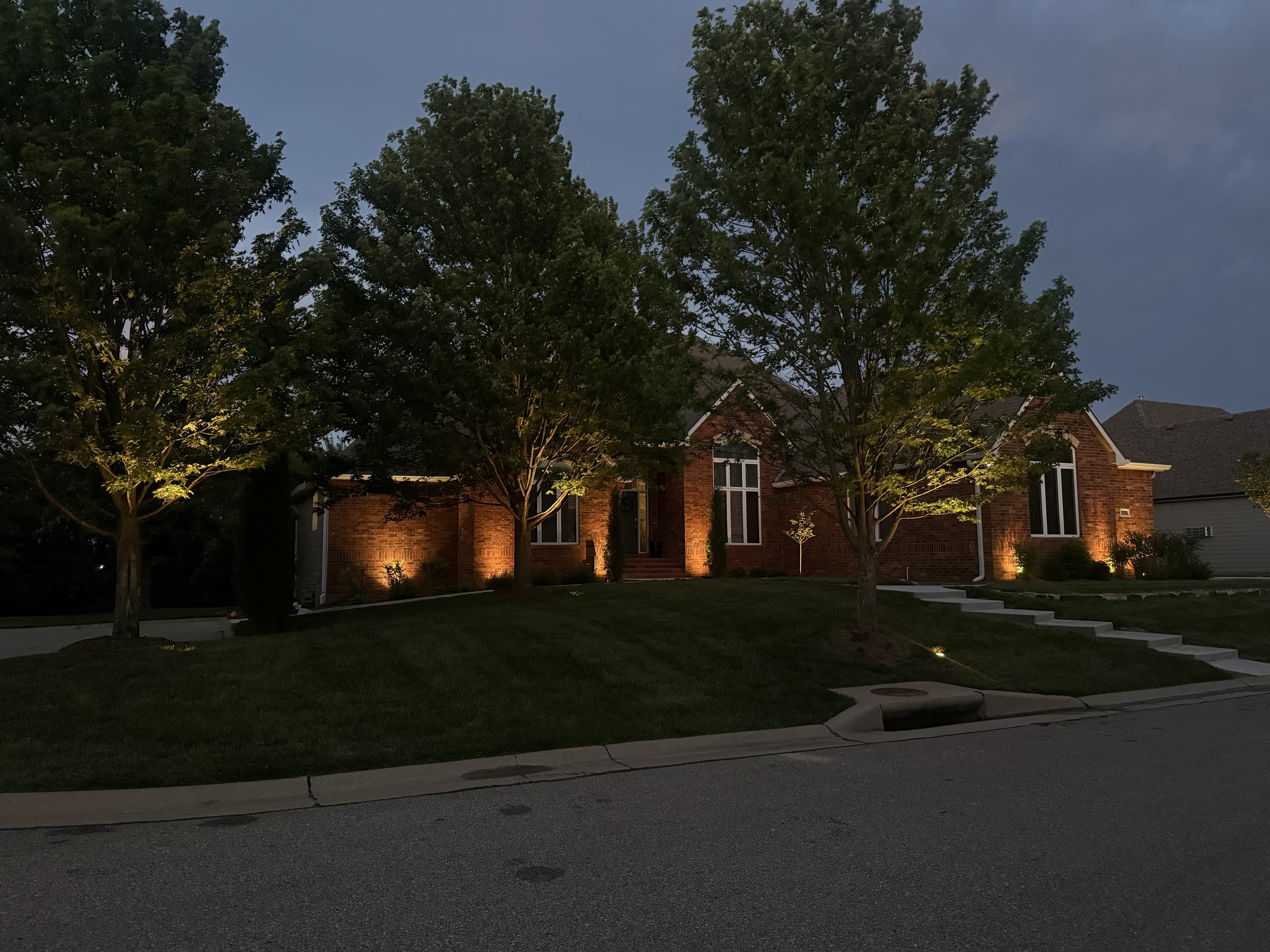
A front yard has to work at two distances. It should look balanced from the street, and it should feel comfortable when someone is actually walking to the door. The best plans handle both without lighting every square foot of the property.
1. Pick the view that matters most
We start where the home is most often seen: usually the street, driveway, or front approach. From there, we look for the parts of the property that create its silhouette and character.
It might be a tall roof peak, a row of brick columns, one mature tree, or a recessed entry. Those become the visual anchors. If the anchors read clearly, the whole property starts to make sense at night.
2. Make the entry feel obvious
Guests should never have to wonder where to go. We look at the walkway, changes in elevation, turns, porch steps, and any dark pockets near the door.
That does not mean blasting the path with light. A few well-spaced pools of downward light can guide movement while keeping the entry relaxed and welcoming.
3. Let the architecture tell us what to light
Every home has rhythm. Windows repeat, columns divide the facade, and rooflines create peaks and shadows. We use lighting to reveal that rhythm instead of fighting it.
On a brick home, grazing the surface can show texture. On a simple ranch, wider spacing can reinforce the long horizontal lines. The fixture count follows the architecture—not the other way around.
4. Add height with one or two landscape moments
Without tree lighting, a front-yard design can feel stuck at the foundation. Bringing one mature tree into the scene adds height and helps connect the house to the full property.
We do not need to light every tree. Choosing the ones with the best form or the strongest relationship to the home keeps the design focused.
5. Leave room for darkness
This is the step people skip. Darkness creates contrast, hides less important areas, and gives your eyes a place to rest. It is what makes the illuminated brick, tree, or entry feel intentional.
If the first draft feels busy, our answer is often to remove a fixture or soften an angle—not add more brightness.
6. Aim the system after sunset
Fixture placement gets us close, but final aiming is where the design comes together. After dark, small adjustments can move a hotspot off a window, catch the edge of a column, or balance one side of the home with the other.
Landscapes also change. Plants grow, seasons shift, and a fixture may get bumped. A good system is designed to be maintained and adjusted, not installed once and forgotten forever.
A strong front-yard plan has a clear view, a clear path, and just enough light to make both feel natural.
Your property is different
Let's build the plan around it.
We design and install outdoor lighting throughout Wichita and the surrounding area. The first conversation is free.
Schedule a consultation